10 Years After the August 2016 Floods in Acadiana
Acadiana’s resilient response to the no-name storm and 2016 floods
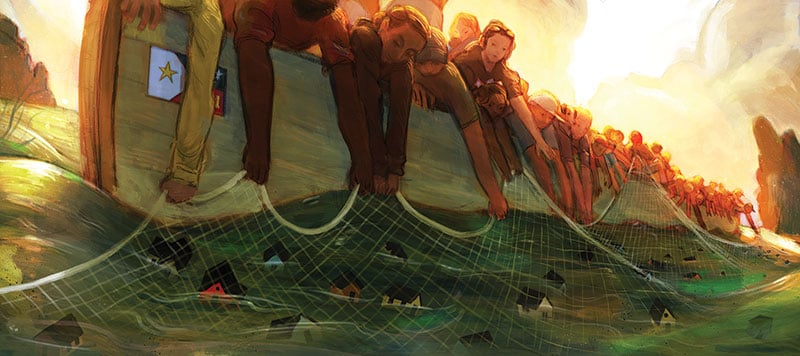
As we arrive at the 10-year anniversary of the historic 2016 floods, one word is consistently used to describe Acadiana’s response to the devastating, no-name storm: resilient.
“Everyone’s flood story is going to be different,” explained Avery Davidson, co-host of “This Week in Louisiana Agriculture.” As someone who advocates on behalf of Louisiana farmers and ranchers when seeking disaster assistance, and someone personally impacted by the 2016 floods, Davidson has first-hand experience of people coming together in times of need.
In August 2016, he recalls carrying his two young sons upstairs as water began coming into their home. With cell phone towers down, they were stuck until a neighbor offered help, and since water was halfway up his calf, Davidson accepted. Following the storm, once the waters receded, Davidson and several co-workers arrived at his house to assess the damage. Immediately, they began pulling everything out of the home. The next day, a bigger crew arrived. Thinking back to Hurricane Rita in 2005 during his time as a newscaster, Davidson said there was never a thought of “Will we rebuild?” It was always “When we rebuild,” and says this flood was no different.
Clyde Cain knows the importance of quick action in the aftermath of disaster. Following Hurricane Katrina, hundreds of people showed up to volunteer and were dubbed the “Cajun Navy” by media, though a formal organization did not yet exist. Following the 2016 floods, Cain founded the Louisiana Cajun Navy, creating a Facebook page to determine who needed help and who could provide help. Now there are several Cajun Navy groups who come together in the wake of disaster, which Cain says is the “embodiment of Louisiana” with neighbors and strangers showing up for one another time and time again.
Dr. Liz Skilton, an associate professor of history at UL Lafayette, specializes in the history of disaster and human response. She explains this research focus has helped preserve history and memories following major events such as hurricanes or floods. When asked about the aftermath of disaster, Skilton says a strength of Acadiana is “the ability to come together after an event,” echoing Davidson and Cain. In 2017, she led a group of UL Lafayette students in collecting stories of individuals’ experiences and how they were impacted. From this, a podcast was created by students. Led by Zach Henry, “Underwater: Memories of the 2016 Floods,” shares stories of people in the Lafayette area and their experiences one year after the flood.
While disaster is certainly not unique to south Louisiana, the determination to rebuild and support one another is, as Davidson says, “who the Acadians are.”