Should Lafayette’s Musicians Look Toward the Past to Solve Future Problems?
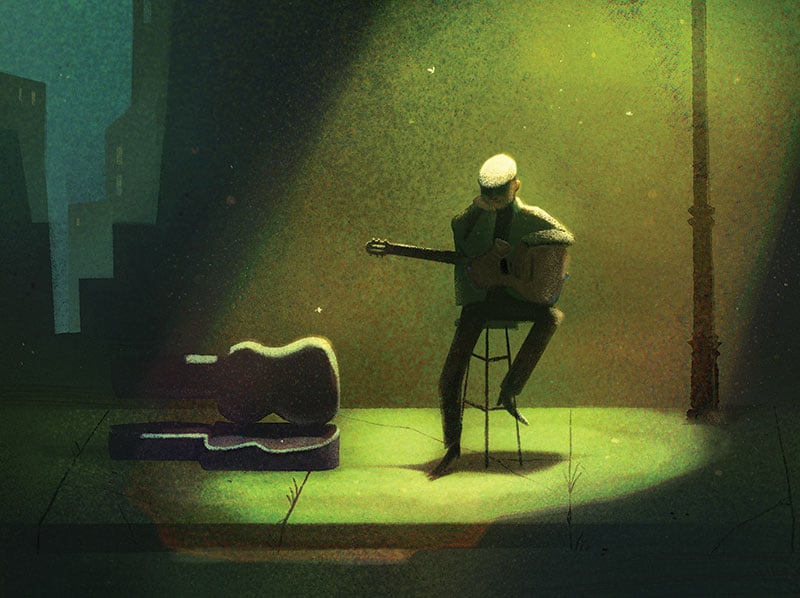
According to the Lafayette Music Census conducted in 2024, the economic activity of Lafayette’s music sector generates $13.2 million annually in income, with 32% of survey respondents’ annual income coming from music. That may sound impressive — and it is — but with such a robust music ecosystem, why are local musicians still struggling to sustain a career within the industry? That’s the question more than two dozen partners who collaborated on the census desired to answer.
In a June article, The Current’s Christiaan Mader wrote, “Local venues are losing audiences, musicians are losing gigs — and everyone is losing money … it’s a difficult time to be in live music.”
The aftereffects of COVID are partly to blame, as are the high costs of going out on tour. Most musicians (63%) have day jobs that are the main source of their income. Venues and presenters also face challenges of security and public safety, parking and permits. Despite all the setbacks, the census found plenty of opportunities, from establishing a music industry hub to promoting public-private partnerships, going forward.
Another project in the works aims to look back at a time when Lafayette’s live music scene was booming — and making history. Spearheaded by former local and touring musician Allen Clements, “Lafayette Rock City” documentary seeks to understand the city’s underground indie rock scene from the mid-1990s through the early 2000s. Friend Dave Aurich had approached Clements, who played in the bands Drive-In Funeral, Claymore and Victim of Modern Age, about making a documentary in the past, but Clements always said no. Once people like Bernard Pearce, Dave Hubbell and Dege Legg started to pass away, Clements realized “the voices that tell the story are disappearing.”
Along with another old bandmate Byron Colby Tatman, they started a Facebook page and asked people to share their memories, found footage, photos, flyers, setlists and more. A trailer dropped in August, and Clements says, “The phone started ringing, the emails started coming in, the trailer got watched 10,000 views in three days.”
Clements lives in Pennsylvania now but tries to stay connected to the local music scene. “It’s difficult for me to find out who’s playing or put my finger on it,” he says. “There were places you could go where you knew things were happening any night of the week.” There isn’t that one spot like Metropolis or Utopia anymore. On the other hand, he sees bands like Lost Bayou Ramblers and Givers crossing genres and attracting fans of all ages.
Clements believes the solution to Lafayette’s live music conundrum lies in collaboration.
“It’s just how industrious the people are and how crazy we [are] about making shows work, about making things happen, about making community happen,” he says. “We need things like infrastructure, like people working together to make beautiful things. You can’t just do it in your closet by yourself. And that’s what definitely was there in the ‘90s. That’s what is very difficult to make now. And I hope that people find it.”
Stories That Strike a Chord | From film to print to conversation
Documentary:
“The Chameleon Club” directed by Allen Clements on Apple TV. facebook.com/thechameleonclub
Book:
“The King of Zydeco: The Life, Music, and Legacy of Clifton Chenier” by Todd Mouton available from Amazon. kingofzydeco.com
Event:
Big Towns Summit April 22-23, 2026. bigtowns.org
