It’s Rayneing Frogs
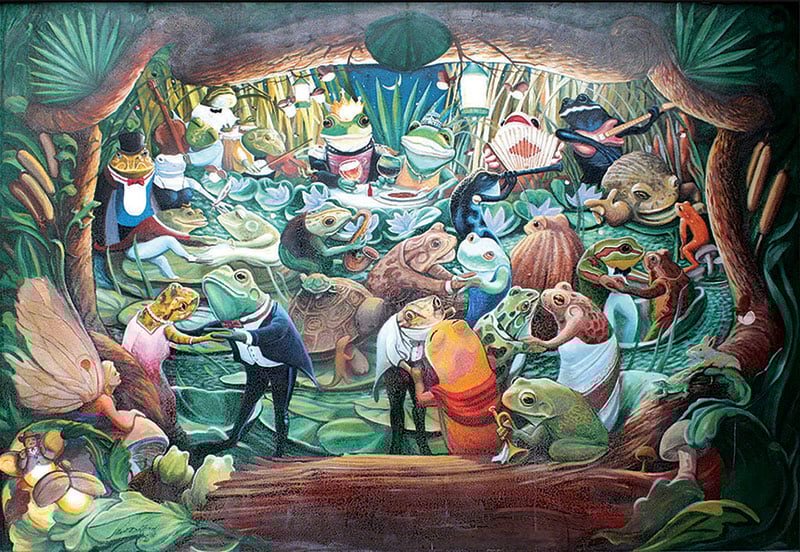
Like many southwestern Louisiana towns, Rayne got its origins in the western expansion of the railroad; the town was named for Rayne Grey, an engineer for the Southern Pacific Railroad. But it would be frogs that put the agricultural town on the map. At the beginning of the 20th century, Rayne harvested bullfrogs for their legs to be eaten in high-end restaurants throughout the United States. The culinary trend has passed but Rayne is now known as the “Frog Capital of the World,” and hosts the annual Rayne Frog Festival in May and sports frog murals throughout downtown.
Murals & More
In the 1800s Jacques Weil and his brothers raised frogs to sell to restaurants. The business boomed and Rayne became known as the “Frog Capital.” There are numerous murals throughout downtown and even more frog statues honoring the city’s amphibian history. Take a stroll through the heart of the city and enjoy the artwork that’s mostly close to the historic Depot Square and along Texas and Louisiana avenues.

Dining
With all that fuss about frogs, get yourself a plate at Chef Roy’s Frog City Café (chefroy.com). The long-standing Rayne restaurant serves Cajun favorites as well. During crawfish season, drive out of town to the off-the-beaten-path Hawk’s Crawfish Restaurant (hawkscrawfish.com) — close to Robert’s Cove — where Louisiana’s favorite crustaceans are served hot and well spiced.
Graveyards
The St. Joseph Catholic Church cemetery includes graves placed in a north-south position, instead of the traditional east-west position, and this unique reversal — believed to be the only U.S. Christian cemetery doing so — gained it a mention in “Ripley’s Believe It or Not!” Not far from Rayne are two equally unique cemeteries, the Istre Cemetery in Morse, known for its grave houses now placed on the National Register of Historic Places, and the gravesite of Charlene Richard, known as “the Little Cajun Saint” for her alleged interventions, at St. Edward Catholic Church in Richard.