You Are What You Eat
Our Food and Our Health
Jean Anthelme Brillat-Savarin, a celebrated French gastronome (“epicure, food-lover”), opens his 1826 book The Physiology of Taste with a series of twenty culinary aphorisms, the most famous of which is: “Tell me what you eat : I will tell you what you are.” (“Dis-moi ce que tu manges : je te dirai ce que tu es.”). Brillat-Savarin is talking here about knowing a person, about being able to identify the culture they belong to, pinpointing the fossilized tastes of their childhood hearths and classifying people in relation to certain ingredients and preparations that may hint at their home region, their social class, their religion, and so forth; today, however, the modern, much more familiar form of this dit-on (“saying”) — “You are what you eat” — has drifted, and narrowed, a bit in its meaning: when we draw on this adage today, we typically are referring to our physical health and well-being, invoking in particular the idea that our continued good health as individuals rests, at the end of the day, on a good, wholesome diet, and that many of our health problems, as well as their solutions, arise ultimately and fundamentally — if, admittedly, not simply — from the food that we put inside us.
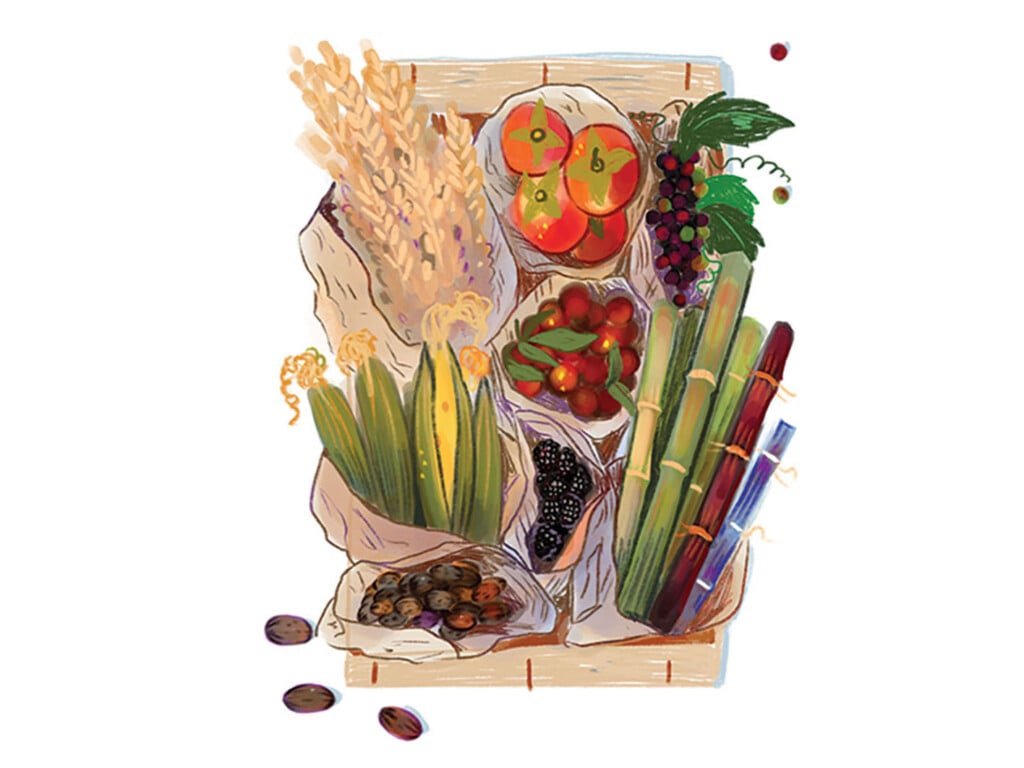
Two hundred years ago, when The Physiology of Taste was first published, and indeed through the better part of the interceding pair of centuries, the majority of the world’s population worked in food production, in most cases spending their time producing, processing or otherwise acquiring the very food necessary to sustain them and their families: daily life in rural regions the world over, but especially here in French Louisiana, revolved around la chasse (“hunting”), la pêche (“fishing”), le jardin (“gardening”), la piège (“trapping”), la trôle (“trawling”), l’élevage des bêtes (“livestock raising”), and, above all, la récolte (“farming, agriculture”; also, “harvest, crop”). The importance of agriculture and its everyday ubiquity here in Louisiana is evidenced by the rich and varied vocabulary that still today divvies up this semantic domain in our language: the typical habitant (“farmer”; also, récoltier, récolteur, cultiveur) of yesteryear would have, depending on the season and region, spent long — sometimes leisurely, usually laborious — days après couper du riz (“cutting rice”) or des cannes (“sugarcane”), après casser du maïs (“breaking corn”), après fouiller des patates (“digging potatoes”), après gauler des pacanes (“poling pecans”), and après ramasser (“picking, gathering”) a variety of other crops, both cultivated and wild, to round out their diet, such as des piments (“peppers”), des socos (“muscadines”), des misplusses (“Japanese plums”; also, des nèfles), des plaquemines (“persimmons”), and des mûrs (“blackberries, mulberries”), among many, many others.
Ça va sans dire (“It goes without saying”) that, thanks to the advances of modern medicine and sanitation, most of us today live much longer and much healthier lives than those of our forebears, but it is true also that this premodern living certainly afforded some benefits: this food, sourced hyper-locally and of course — by our very definition of this term — free of all “unnatural” additive and pest-management compounds, would be the envy of any health-conscious consumer today, and shows us that a diet of local, natural, healthy food is not only a realistic but (“goal”), but also an historically, profoundly, and eminently normal state of affairs.